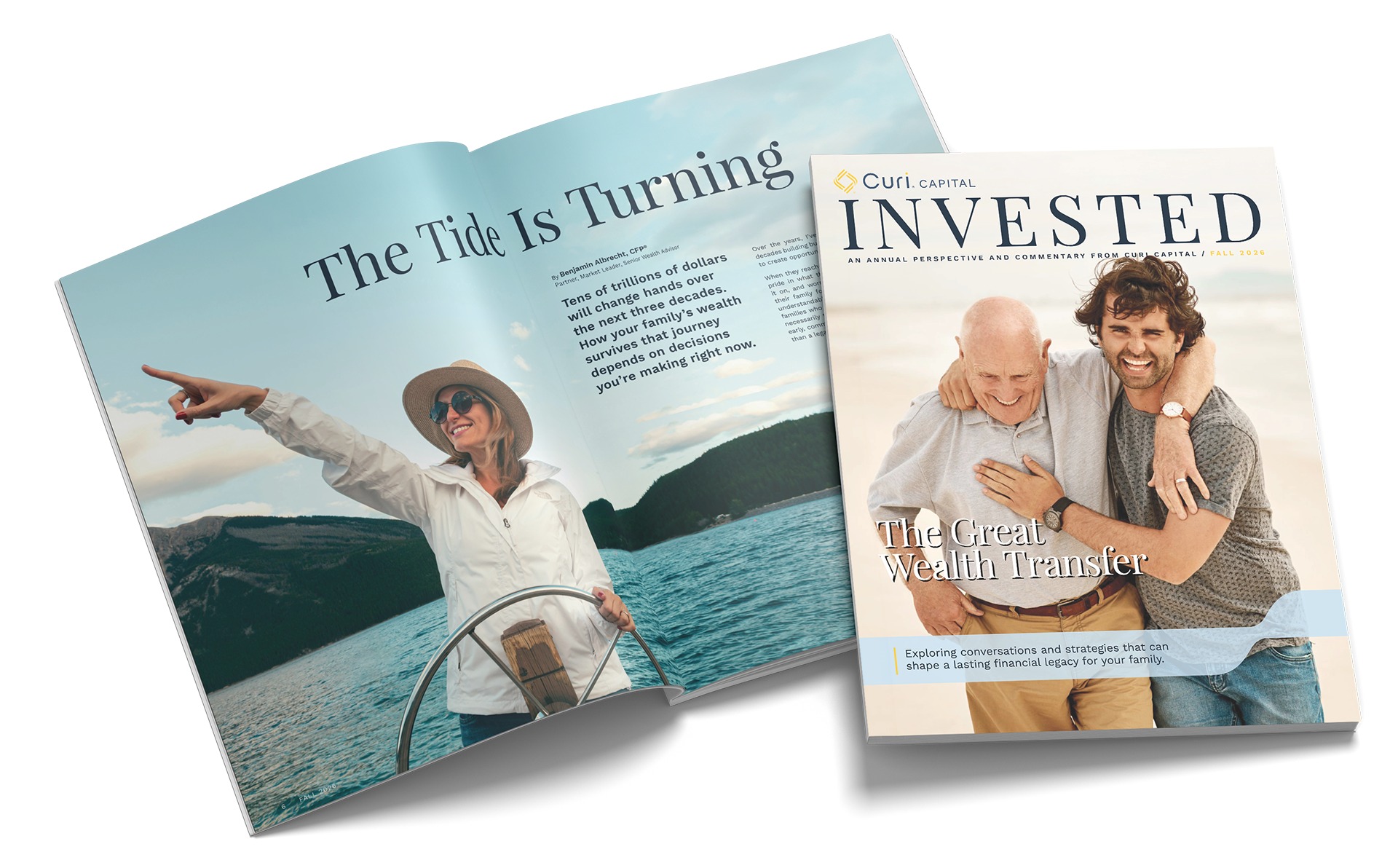
From Wealth Creator to Wealth Steward: How Family Offices Support Generational Transitions
Key Takeaways
- For many families, the greatest challenge in multigenerational wealth planning is not transferring assets. It is preparing the people who will inherit them.
- A family office coordinates investment oversight, tax and estate planning, philanthropy, governance, and financial education as interconnected systems, not separate services.
- Research consistently points to three factors that separate families who sustain wealth from those who lose it: communication, governance, and preparation.
- A structured, facilitated family meeting may be the most underrated tool in multigenerational wealth planning.
For many, the greatest challenge in multigenerational wealth planning is not transferring assets. It is preparing the people who will inherit them.
Families often spend years building wealth but far less time preparing the next generation to manage it, even though the two require different skills. The entrepreneur who built a business from scratch and the heir who inherits a complex trust structure face fundamentally different responsibilities. Recognizing that distinction before a transfer occurs is one of the most consequential things a family can do for its long-term legacy.
This is the work that occupies much of my time.
What a Family Office Actually Does at This Moment
A family office is designed to manage complexity: Investment oversight, tax and estate planning, philanthropy, governance, and financial education function as interconnected systems, not separate services. For families with substantial, multigenerational wealth, coordinating those systems keeps important details from falling through the cracks.
That coordination becomes especially important during a generational transition.
“The infrastructure we built for the parents becomes the infrastructure that catches the children.”
The administrative demands alone can be significant: Retitling assets, updating beneficiary designations, activating trust provisions, and reevaluating investment strategies, and none of it happens automatically.
But it’s the human work, not the administrative work, that ultimately determines whether wealth survives a transition.
Preparing the Next Generation: Where to Start
Research consistently points to three factors that separate families who sustain wealth from those who lose it: communication, governance, and preparation. Our challenge is turning those principles into practical action.
We start on the edges, introducing the next generation to the family’s philanthropic activities through a donor-advised fund or family foundation, a low-stakes way to build shared vocabulary around values before tackling harder topics.
We build financial literacy deliberately. Portfolio construction, investment fundamentals, and account structures aren’t knowledge heirs automatically possess, so we teach these concepts at the right stage, so they can participate meaningfully in financial discussions rather than simply observe them.
We run estate plan simulations, walking families through how assets would transfer under different scenarios, without attaching dollar amounts. Removing the numbers lowers the emotional temperature and helps family members understand why decisions were made.
The Path from Heir to Steward: A Practical Framework for Developing the Next Generation
Foundation | Early Years
- Values conversations
- Donor-advised fund exposure
- Family foundation participation
Financial Literacy | Young Adult
- Stocks, bonds & portfolio basics
- Retirement planning
- Understanding the family balance sheet
Governance | Established Adult
- Family meetings
- Estate plan simulation exercises
- Investment committee participation
Stewardship | Leadership
- Decision-making authority
- Advisor relationships
- Legacy and philanthropic direction
The Family Meeting as Infrastructure
The most underrated tool in multigenerational wealth planning may be the family meeting.
Not the conversation that happens over a holiday dinner table, but a structured, facilitated discussion where parents, adult children, and sometimes spouses discuss the family’s financial life, values, and future direction.
A family office can serve as a neutral facilitator: Many wealth creators have never experienced receiving a significant inheritance themselves, so an experienced facilitator creates space for questions and keeps difficult conversations productive.
These meetings build a shared understanding of what wealth is for, and create a framework for discussing harder topics over time, from philanthropy and family values to trusts, governance, and succession planning.
Families that navigate generational transitions most successfully rarely wait until wealth transfer is imminent to begin these conversations. Establishing communication habits early makes important decisions easier to navigate when the time comes.
Preparing for Tomorrow, Today
Ultimately, this is why many families hire a family office: not simply to manage assets, but to provide continuity beyond the founding generation while preserving the values, history, and intentions that shaped the family’s success.
Families that focus only on transferring assets risk leaving heirs with resources but no context. Those that invest in preparation and communication give the next generation something far more valuable: the ability to steward those resources thoughtfully.
That’s the transition from builder to steward.
And in my experience, the families that make that transition intentionally are the ones most likely to see their wealth, values, and legacy endure for generations to come.
Frequently Asked Questions
What does a family office do during a generational transition?
A family office manages complexity, coordinating investment oversight, tax and estate planning, philanthropy, governance, and financial education as interconnected systems. During a transition, the administrative demands alone can be significant: retitling assets, updating beneficiary designations, activating trust provisions, and reevaluating investment strategies. But it’s the human work, not the administrative work, that ultimately determines whether wealth survives a transition.
How do you prepare the next generation to inherit wealth?
Research consistently points to three factors that separate families who sustain wealth from those who lose it: communication, governance, and preparation. In practice, that can mean introducing the next generation to the family’s philanthropic activities through a donor-advised fund or family foundation, building financial literacy deliberately at the right stage, and running estate plan simulations.
What is an estate plan simulation?
An estate plan simulation walks families through how assets would transfer under different scenarios, without attaching dollar amounts. Removing the numbers lowers the emotional temperature and helps family members understand why decisions were made.
Why are family meetings important for multigenerational wealth?
A structured, facilitated family meeting brings parents, adult children, and sometimes spouses together to discuss the family’s financial life, values, and future direction. These meetings build a shared understanding of what wealth is for and create a framework for discussing harder topics over time, from philanthropy and family values to trusts, governance, and succession planning.
Disclaimers
The opinions and analyses expressed in this presentation are based on Curi Capital LLC’s (“Curi Capital”) research and professional experience and are expressed as of the date of this presentation. Certain information expressed represents an assessment at a specific point in time and is not intended to be a forecast or guarantee of future performance, nor is it intended to speak to any future time periods. Curi Capital makes no warranty or representation, express or implied, nor does Curi Capital accept any liability, with respect to the information and data set forth herein, and Curi Capital specifically disclaims any duty to update any of the information and data contained in this presentation. The information and data in this presentation does not constitute legal, tax, accounting, investment, or other professional advice.
The content contained herein was generated by Curi Capital with the assistance of an AI-based system to augment the effort.
CFA® and Chartered Financial Analyst® are registered trademarks owned by CFA Institute.