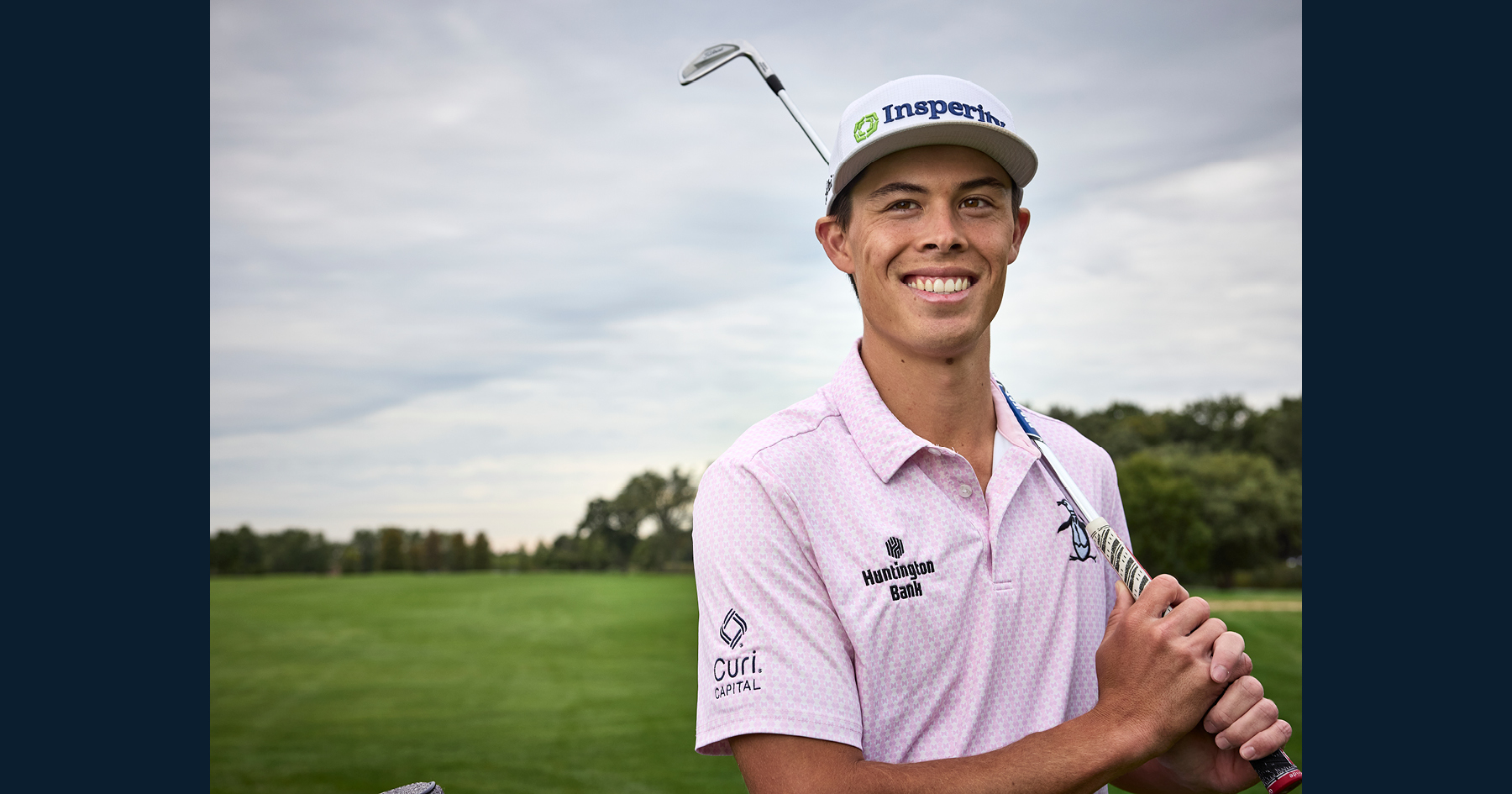
Professional Golfer and Curi Capital Partner
After a standout collegiate career at Baylor, Johnny finished No. 1 on the PGA Tour Americas points list in 2024 and No. 1 on the Korn Ferry Tour points list in 2025. Since then, he has continued to reach new milestones — earning his PGA Tour card and competing in all four major championships as a rookie in 2026. We sat down with Johnny to hear about his career journey, the defining moments along the way, and his reflections on the game as he continues competing at the highest level.
What first drew you to golf, and when did you realize you wanted to pursue it professionally?
Golf wasn’t really on my radar at first — lacrosse was my main sport growing up. My dad got me into it by offering to buy me new lacrosse equipment if I took lessons and joined him on the course. Once I started playing, though, I was hooked. I loved the competition, the friendships I made, and the challenge of constantly trying to improve. It was completely different from the team sports I was used to, and I quickly realized I enjoyed the individual grind and the life lessons the game teaches along the way.
What does a typical week look like for you when you’re not competing?
It’s probably a lot more relaxed than people think. During the offseason, I’ll go days — or even weeks — without touching a club to stay fresh and keep the game fun. When I’m in training mode, a typical day starts around 7 a.m. with breakfast and a workout, followed by several hours at the golf course. On grind days, it’s sunrise to sunset.
Who were your biggest mentors or role models in golf growing up?
Growing up, my biggest role models were really Tiger Woods and Rickie Fowler. Tiger was the obvious one — I lived on YouTube early in my golf journey, and I could probably name most of his iconic shots.
But Rickie Fowler was just as influential for me. I always admired how he carried himself on and off the course — fearless, competitive, but also laid-back and genuine. I connected with the style and swagger he played with, and the way he still clearly wanted to win while keeping that personality. That balance really shaped how I think about my own game.
What’s the best piece of advice you’ve received — on or off the course?
The best advice I’ve received on the golf side is “keep it simple.” Golf can feel way more complicated than it needs to be — when you’re in position, just hit the green, don’t chase every flag, and focus on creating more opportunities instead of forcing birdies.
Off the course, the biggest advice ties more into my faith and identity. I’ve been reminded not to define myself by golf or let my performance change who I am. Whether I shoot 64 or 80, I want to stay the same person — treat people with respect, stay grounded, and not let the game dictate my attitude or how I show up in life.
After two incredibly successful seasons leading up to this year, what’s been the biggest adjustment you’ve had to make as a full-time PGA Tour player?
The biggest adjustment has been realizing how good everyone is out here. You have to be sharp every single week because there’s very little margin for error. I’ve also had to learn how to manage my schedule and energy throughout a long season. It’s not just about playing good golf, it’s about recovering well, preparing the right way, and staying patient over the course of the year.
Making your Masters debut this year, you had the opportunity to experience Augusta National and compete on one of golf’s biggest stages for the first time. What was the most memorable part of that experience, and what stood out to you most about playing in your first Masters?
There were a lot of special moments that week but getting to hit the ceremonial first tee shot immediately after Jack Nicklaus, Tom Watson, and Gary Player was something I’ll never forget. I grew up watching those legends start the Masters every year, so being the first player to tee off behind them was surreal. Playing Augusta National also lived up to every expectation. The course is even more demanding in person, especially the greens, and every shot requires a lot of discipli
What events or courses have stood out to you so far in your first PGA Tour season, and why?
Augusta National is obviously at the top of the list because it was my first Masters. Another course that really stood out was Shinnecock Hills at the U.S. Open. It’s one of the most iconic championship venues in golf, and it tests every part of your game. Competing on courses with so much history and tradition has been one of the coolest parts of my rookie season.
Looking back on the goals you set entering your rookie season, what areas of your game have improved the most, and what lessons have you learned about your game this season?
I think I’ve continued to become more comfortable competing against the best players in the world. Every week reinforces how important consistency is, both physically and mentally. I’ve learned that sticking to my process and staying patient usually leads to my best golf, even when results don’t come immediately.
Playing a full PGA Tour schedule for the first time means more travel, tougher fields, and greater demands on your time. What aspect of life on Tour has surprised you the most?
Probably how much happens outside of tournament rounds. Between practice, travel, fitness, sponsor commitments, and recovery, there’s always something going on. I’ve learned that managing my time and taking care of myself away from the course is just as important as the work I put in on it.
Disclaimers
Please note this testimonial is from a current client of Curi Capital and the client was compensated for the testimonial through a sponsorship arrangement. The individual will be monetarily compensated based on his yearly Official World Golf Rankings. Past performance is not a guarantee of future results.
The opinions and analyses expressed in this presentation are based on Curi Capital LLC’s (“Curi Capital”) research and professional experience and are expressed as of the date of this presentation. Certain information expressed represents an assessment at a specific point in time and is not intended to be a forecast or guarantee of future performance, nor is it intended to speak to any future time periods. Curi Capital makes no warranty or representation, express or implied, nor does Curi Capital accept any liability, with respect to the information and data set forth herein, and Curi Capital specifically disclaims any duty to update any of the information and data contained in this presentation. The information and data in this presentation does not constitute legal, tax, accounting, investment, or other professional advice.
The content contained herein was generated by Curi Capital with the assistance of an AI-based system to augment the effort.